
Dartmouth City Directory Collections
The historical shelf is regional as well as local. The verified early volumes place Dartmouth with Acushnet and Westport, so a name found under that broad title is not automatically within Dartmouth's present boundary. The National Archives city-directory list confirms combined Dartmouth, Acushnet, and Westport volumes for 1905, 1909-1910, 1915, 1927, 1929-1930, and 1932. Later Dartmouth selections and house-guide leads belong to State Library finding aids, where the exact volume should be checked before a visit or request.
| Collection | Years | Where held | Access |
|---|---|---|---|
| Dartmouth/Acushnet/Westport resident and business directories | 1905; 1909-1910; 1915; 1927; 1929-1930; 1932 | NARA list and library finding aids | Scan or reading-room research; combined geography |
| Selected Dartmouth directory volumes | 1905-1969, selected years | Massachusetts State Library finding aid/catalogue | Verify the year, then use or request the volume |
| Dartmouth house-guide directories | 1929-1960, selected years | Massachusetts State Library finding aid | Address-focused lead; actual run requires verification |
| Town Reports and Chronicle microfilm | Town Reports from the 1890s; Chronicle from the 1960s | Dartmouth Public Library | Local-history and reference research |
No source located a complete Dartmouth-only printed shelf at the local library, and no source proves every year in a proposed run. That gap is useful information. Ask for the closest confirmed year, then use interlibrary loan or the State Library rather than assuming a missing volume was never printed.
Dartmouth Directory Years and Geography
The 1905 title is especially revealing: it is a resident and business directory of Dartmouth, Westport, and Acushnet, with resident, street, and business material plus civic and community pages. A directory search should therefore record the volume title as well as the entry. Padanaram, Bliss Corner, Smith Mills, Russells Mills, and Hixville may appear as local place language, while another volume can group the same household under a wider regional heading.
The NARA directory listing is a sound starting point for the verified years, not a substitute for reading a scanned page. Use the Massachusetts State Library holdings list to test a later-year lead. A FamilySearch pointer reports selected Dartmouth directories through 1969 and house guides through 1960, but it is a finding aid rather than an official catalogue record.
The National Archives regional directory list records the Dartmouth sequence.
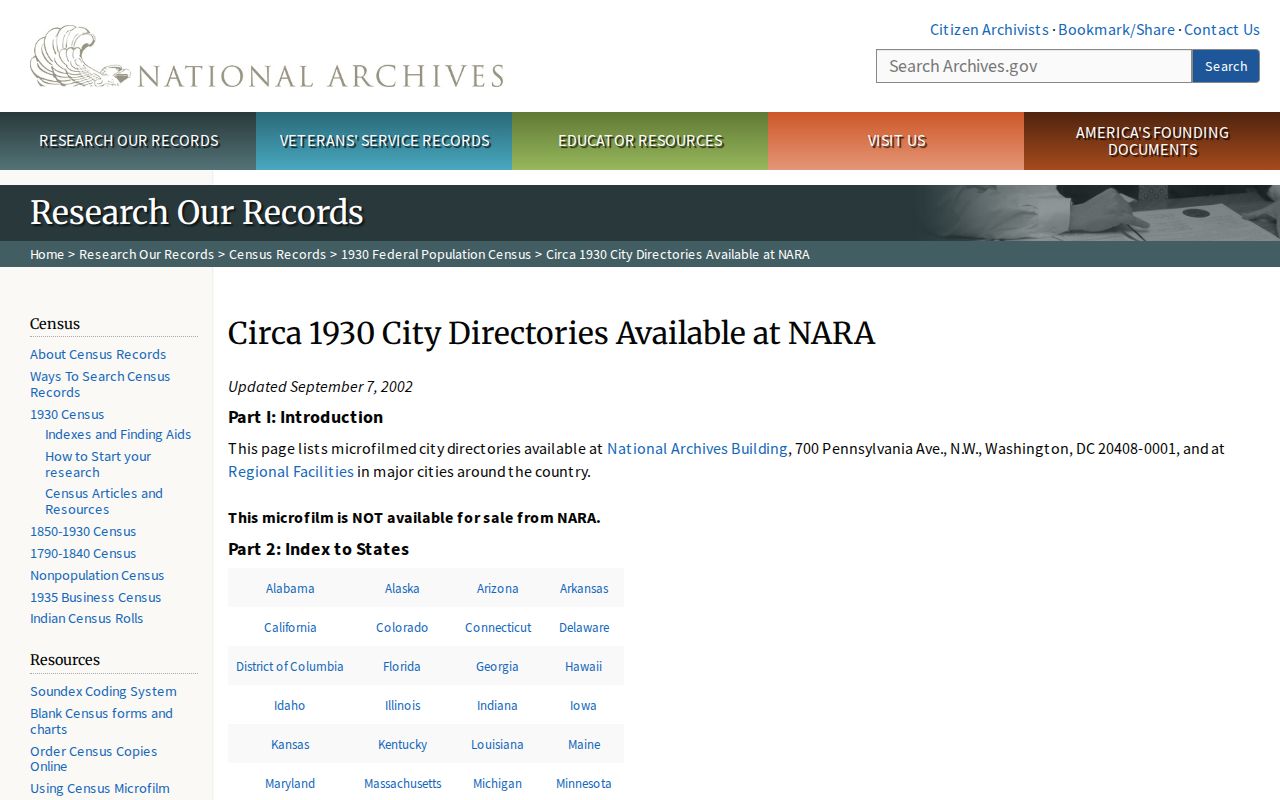
Use the listed years to make a timeline of search targets, then preserve the edition and town grouping in every research note.
Note: A regional directory entry is a dated lead, so compare its place label with maps and later records before assigning it to modern Dartmouth.
Dartmouth Directory Research at the Library
Dartmouth Public Library local history and genealogy provides the practical local desk for directory research. Southworth Library holds Town Reports back to the 1890s, Chronicle microfilm back to the 1960s, Old Dartmouth Historical Sketches, local histories, and licensed research tools. Ancestry Library Edition is available on library public computers. HeritageQuest is available in the library and remotely with a Dartmouth library card, with the library describing its census coverage as 1790-1930.
Reference staff can help search the catalogue and request material through SAILS and the Commonwealth Catalog. Southworth reference is listed at 508-999-0726 ext. 4103, and the North Branch reference desk at 508-999-0728. The library estimates five to seven working days for Commonwealth Catalog material and two to three weeks for material beyond the region. Request terms that match the record, including Dartmouth, Dartmouth/Acushnet/Westport, resident and business directory, street directory, and house guide.
The library's local-history page shows the hybrid shelf, microfilm, and database access behind a Dartmouth directory search.
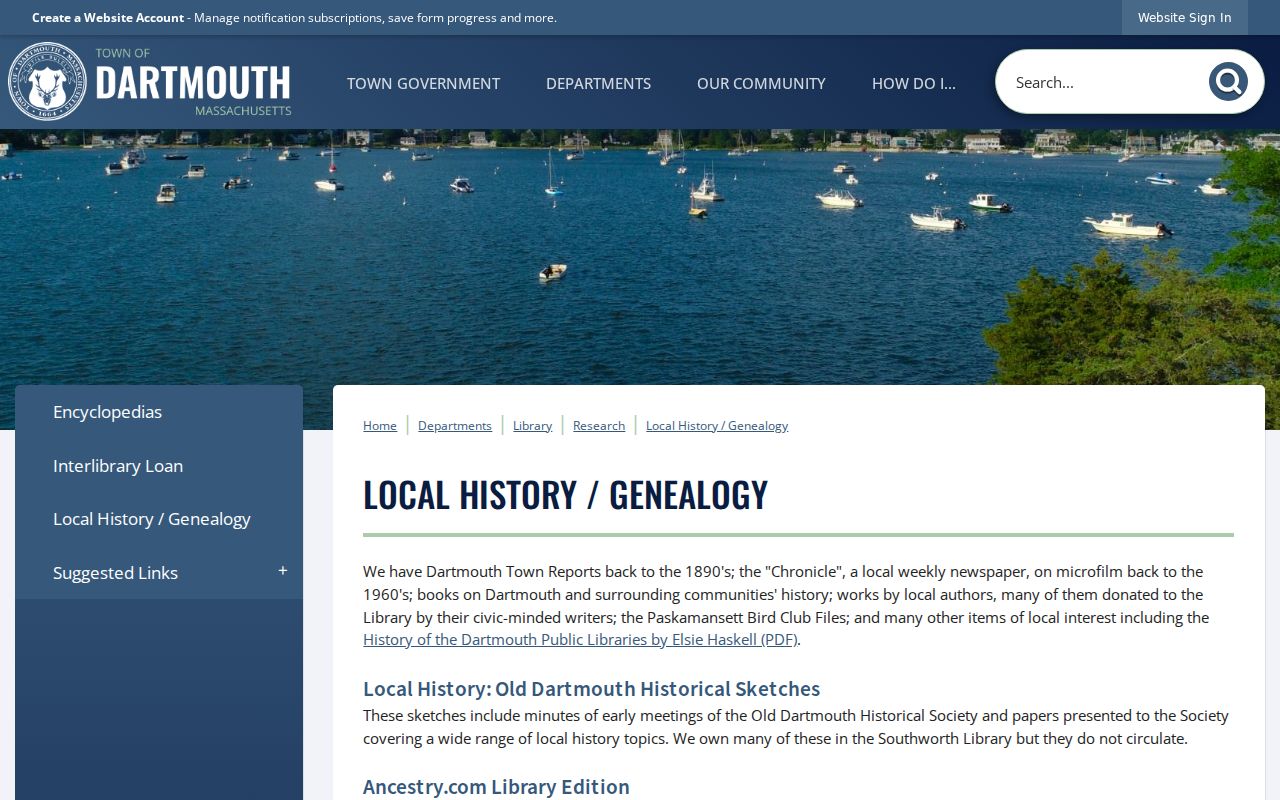
The local library supplies context and a request path even when an exact directory year is held elsewhere.
Reading a Dartmouth Directory Entry
Use an entry from a Dartmouth directory as a compact historical snapshot, not as a modern identity record. The available collection descriptions support a careful inventory, but they do not expose a Dartmouth page image or a verified abbreviation key. Read the front matter first and write down its meanings before expanding an initial into a full name or treating a household marker as proof. Rural entries can use a village, post office, or route instead of a numbered street.
| Name | Surname and given name or initial, sometimes with a spouse or widow/widower notation. |
|---|---|
| Historical occupation | A trade, calling, employer, or business cue that can separate people with the same name. |
| Address or place | A house number and road when supplied, or a village, post-office, or rural description. |
| Household marker | An owner or householder mark only where that specific volume defines one. |
| Section type | Alphabetical residents, street/address list, business list, or community matter. |
- Criss-cross directory
- A reverse arrangement that sorts entries by street or address instead of by surname, when a volume includes one.
- Householder index
- An address or household-oriented listing that can help separate occupants from a surname-only search.
- Abbreviation key
- The volume's own explanation of shortened labels, usually in its preliminary pages; photograph or transcribe it before interpreting marks.
Exact marks vary by publisher and year. Do not import an abbreviation from another Massachusetts directory into a Dartmouth volume without checking that volume's key.
Dartmouth Directory Record Timeline
Dartmouth's directory history does not form one uninterrupted local publication line. It moves from a regional combined volume to selected later holdings, then into library databases, microfilm, reports, maps, and land research. The dated entries keep documented points separate from unverified shelf claims. That distinction matters when a household appears in one source but not another.
- 1905: The verified Dartmouth, Westport, and Acushnet resident and business directory appears.
- 1909-1910 through 1932: NARA identifies further verified combined directory years, with gaps between editions.
- 1929-1960: State Library finding aids identify selected Dartmouth house-guide runs, subject to volume verification.
- 1905-1969: Finding aids point to selected Dartmouth city-directory holdings at the State Library.
- Current library access: Town Reports, Chronicle microfilm, Ancestry Library Edition, and HeritageQuest supply companion research.
This is a records-history story as much as a directory story: regional printing and different custodians explain many apparent gaps. A missing name can reflect a move, death, marriage or name change, an omitted rural household, a missed edition, or a change in how the directory grouped towns.
Tracing Dartmouth Directories Across Households
Start with a known name or address and choose the closest confirmed Dartmouth directory year. Follow the alphabetical entry, then use a street or house-guide section when that edition has one. The practical value comes from repeating the same check across nearby editions and connecting it to the federal census. The latest public federal census is 1950 under the 72-year release rule, while the library describes HeritageQuest's older census set as 1790-1930.
- Find the earliest nearby directory entry and note the exact spelling, place label, street, and any household wording.
- Check the next available edition, allowing for a name change, a regional town grouping, or a rural address description.
- Use the street or house-guide portion where present to record adjacent entries and distinguish same-name people.
- Pair the dated directory clue with the nearest public census year, then compare household relationships and birthplace details.
- Confirm a move, death, or inheritance with Town Reports, Chronicle microfilm, vital indexes, probate, or deeds.
Names that disappear should be investigated, not explained away. A directory omission does not itself prove death or departure. When a historical entry needs a current-record check, use the property and address tools on the Dartmouth Street Directory rather than treating an old directory as a present-day address list.
Note: Keep the volume year and its town title with every citation, because a Dartmouth family may be indexed in a combined regional edition.
Dartmouth Directory Companion Records
Town Reports can confirm local offices, projects, appointments, and civic context. Chronicle microfilm can add dated notices, obituaries, marriages, property items, and local names. These sources work best after a directory identifies a date range. They can then test whether a person was still in the community, whether a road name appears in the period, or whether a family event explains a changed entry.
For an older household, Dartmouth Historical and Arts Society preserves Quaker and colonial material, family groups, burial-place lists, maps, house histories, town and village histories, and Bristol County land abstracts. Its resources are valuable leads, but a transcription should be compared with the Registry, Town Clerk, Probate Court, Archives, or another appropriate custodian when a fact needs formal confirmation.
Dartmouth Directory Clues Before 1905
Before the confirmed directory years, use the local historical layer instead of forcing a later format onto earlier Dartmouth. The Dartmouth Historical and Arts Society digital library connects Quaker meeting records, Old Dartmouth town material, genealogies, maps, house histories, and family sources. Its land research describes Bristol County deed abstracts for 1687-1709 and a broader transcription project covering about 1668-1767 from volumes 1-50, including roughly 3,500 documents.
Early descriptions may name a farm, neck, mill, proprietor division, or neighboring landholder instead of a street number. Search a surname in several spellings and combine it with maps, probate, tax-history leads, and old deeds. The Registry's official old-index images provide a separate path into land transactions, while DHAS supplies local context for the family and place names around them.
DHAS's digital library provides the local historical collection behind pre-directory Dartmouth family research.
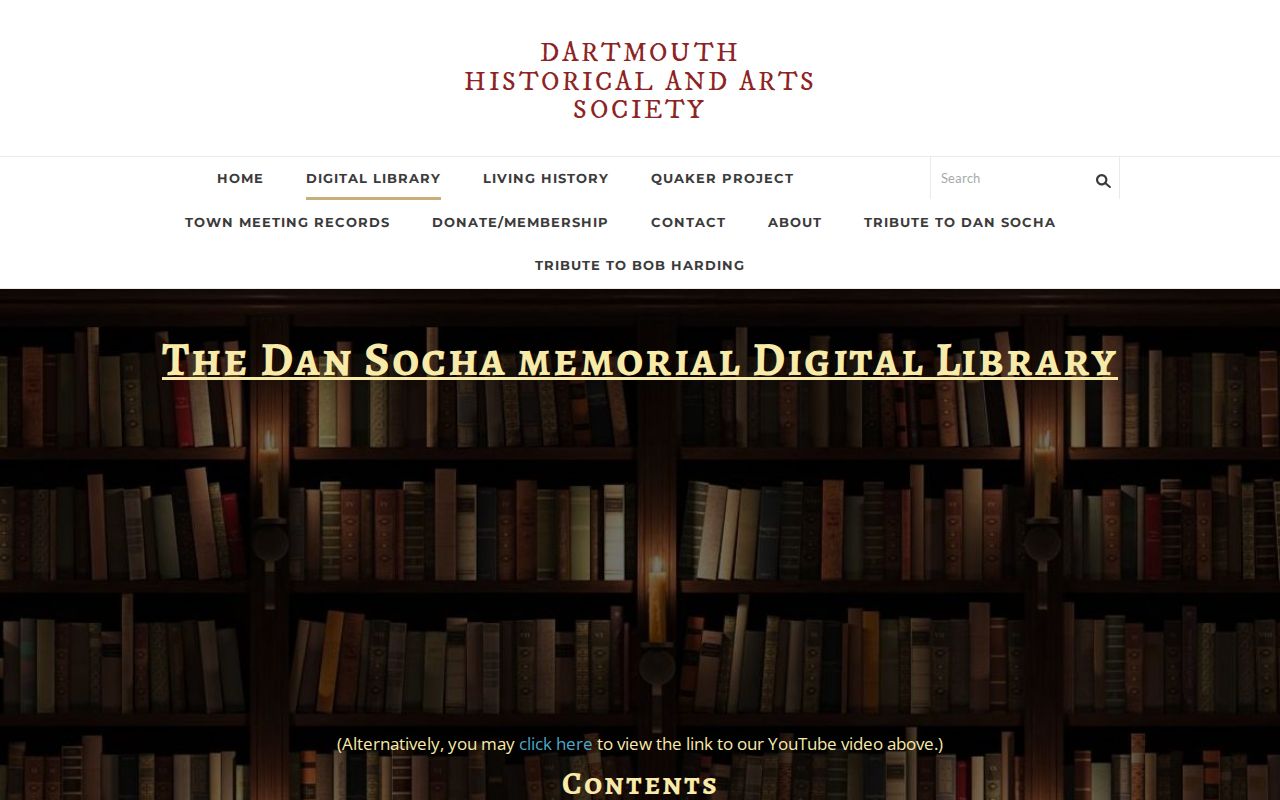
The image points to a local layer that can explain an old directory clue without replacing the official record trail.