
Find Dartmouth Residents by Record
Dartmouth keeps useful pieces of the resident trail in different places. The Assessor’s card is the best first stop for a parcel, while the Town Clerk’s street list is the household-oriented municipal source. The Southern District Registry of Deeds names parties to land transactions, and the library shelves the dated material that can connect an older address to a family. None of those sources alone proves every person who lives at a home. Together, they let a researcher compare a name, an address, a record date, and the kind of connection the record actually documents.
Begin with the detail that is least likely to be confused: a complete address, a middle initial, an event date, or a parcel identifier. Check the date printed on every result. A parcel owner can use another mailing address, a voter-status form is an individual confirmation, and a deed records a transaction rather than daily residence. When an online result is incomplete, Dartmouth’s department-based records process, the relevant counter, the library, and court terminals provide the documented fallback routes.
- Search the Dartmouth Vision property database by address, owner, or map-lot-style identifier and preserve its owner-as-of date.
- Use the Massachusetts voter-status form only to confirm an individual who can supply the requested name, birth date, and five-digit residential ZIP.
- Follow the parcel card’s book, page, certificate, or sale reference into the Southern District Registry search.
- For an older household, compare a library directory, Town Report, Chronicle notice, census, obituary, or DHAS family and land material.
- Request an existing Dartmouth record from the department that keeps it, with a record type and date range, when no public portal offers it.
Note: A Dartmouth resident search is strongest when two dated official or local-history sources point to the same person or address.
Dartmouth Residents Directory Desks
The local records desk depends on the question. The Dartmouth Assessor ties a parcel to an owner of record and tax-mailing information. The Town Clerk holds annual street lists, municipal voter records, local vital material, meeting records, and many town filings. The Southern District Registry is Dartmouth’s land custodian, while Massachusetts Trial Court locations hold court files behind a MassCourts search. The Dartmouth street directory takes up the fuller address-by-address sequence; the cards here identify the officials and portals that start each path.
Bristol South Registry of Deeds
25 N. Sixth Street
New Bedford, MA 02740
508-993-2605
Dartmouth Assessor
400 Slocum Road, Room 213
Dartmouth, MA 02747
508-910-1809
Assessor and Vision property cards
Dartmouth Town Clerk
400 Slocum Road, Room 203
Dartmouth, MA 02747
508-910-1800
Dartmouth Parcel Records by Address
The Vision card and Dartmouth MapGeo viewer are the practical starting points for an address. Vision allows address, owner, and map-lot-block-style searches after entering the online database. MapGeo accepts an Address, Identifier, or Owner and can narrow a map selection with a line, circle, or polygon. The card commonly supplies the site address, owner and co-owner, tax mailing address, parcel ID, value fields, sale date, book/page reference, building data, and links to sales or mapping.
Read the relationship behind each field before treating it as a resident result. The situs address is the physical parcel. The mailing address is where a tax bill goes. An owner of record may be an individual, trust, or entity and may live elsewhere. Vision says ownership updates monthly beginning in October 2020, while its landing notice also carries a valuation-date message, so retain the card’s own date and confirm important information with the Assessor.
- Parcel ID
- A property identifier such as a Vision ID, PID, account number, or map-lot-block-unit reference.
- Situs address
- The physical location of the parcel, which can differ from an owner’s tax mailing address.
- Index
- A finding tool that points to a record, not the same thing as an official certified copy.
- Criss-cross directory
- The street-ordered portion of some historical directories, used to check an address rather than a surname.
The Dartmouth Vision assessment portal is the source for the property-card screen and its current search entry.
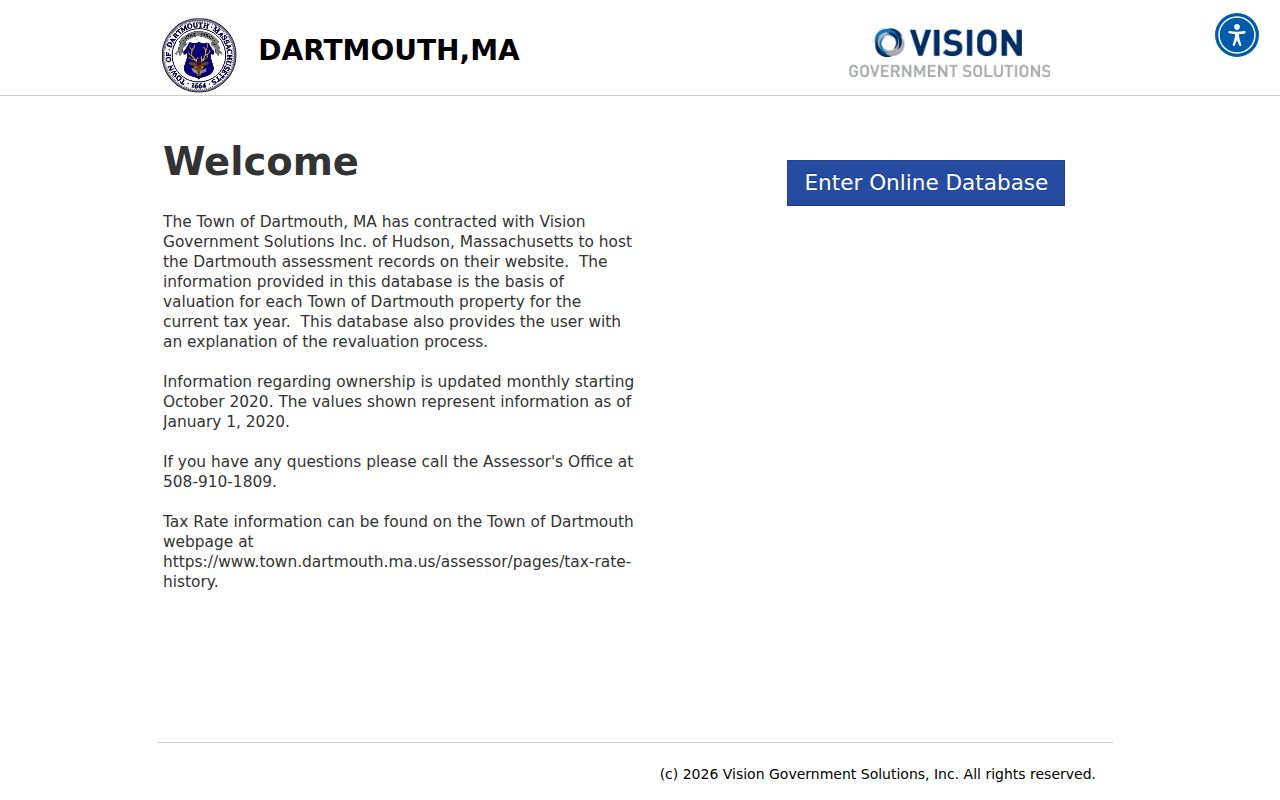
The card is most useful when its parcel identifier and sale reference are carried into the next Dartmouth record, rather than read as an occupancy list.
Note: A parcel card documents assessment and ownership information, not a complete roster of household members.
Dartmouth Voter Status Boundaries
The Commonwealth’s voter registration status form is useful for confirming one person’s registration. It asks for first name, last name, date of birth, and a five-digit residential ZIP, plus agreement to the form’s terms. It is not a public street-by-street directory or a bulk-download route. Dartmouth municipal voter records are handled through the Town Clerk, while the statewide voter file is not generally a public record.
| Voter-form field | Format | Use in a Dartmouth search |
|---|---|---|
| First name | Text | Identifies the individual being checked |
| Last name | Text | Use the person’s legal or registered form |
| Date of birth | Date selectors | Separates people with similar names |
| Residential ZIP | Five digits | Confirms the individual’s registration query |
| Agreement | Checkbox | Required before a public status search |
The state voter-status form shows why an individual confirmation cannot substitute for a local roll request.
For a block, precinct, or dated local list, a written request to the Town Clerk should identify the existing record sought. Public local fields have limits, and protected or confidential voters are withheld.
Dartmouth Street List Details
Dartmouth’s annual town census produces a January 1 street listing that is more household-oriented than the assessor roll. The Town’s 2026 census notice says the printed annual Street List of Residents is available from the Clerk for $20. Its form includes household and resident names, dates of birth, occupation, voter status, and change or deceased fields, but residents under 17 are confidential. The notice also explains that failure to return the census for two consecutive years can affect voter status.
That combination makes the street list a useful dated local record and a poor basis for broad republishing. Ask the Clerk for the current access procedure, record version, and any available redactions. The posted cost and the reported precinct total of 22,896 are practical reminders that the municipal list is a maintained civic record, not a free all-purpose public directory.
Dartmouth Residents Directory Sources
Dartmouth has no one universal live directory. The sources below use different relationships to place: tax ownership, voter registration, a recorded land event, or municipal household listing. The distinction matters. A match is useful evidence only for what the underlying roll is designed to show. For a single person, compare the records in a one-person sequence without treating one result as final proof.
| Source | Who It Lists | Keeper | Access |
|---|---|---|---|
| Vision assessment cards | Owners of record and tax mailing data | Dartmouth Assessor | Free public search |
| Annual street list | Household names and municipal census fields | Dartmouth Town Clerk | Clerk office, with access limits |
| Voter-status confirmation | One registered voter who supplies required fields | Massachusetts Secretary | Individual online form |
| Registry index | Grantors, grantees, and recorded parties | Bristol South Registry | Search and old-image browse |
| Permit and meeting files | Applicants, abutters, and named participants | Dartmouth departments | Portal or RAO request |
Property cards and deeds are strongest for an ownership trail. Street-list and voter material are governed by their own access rules and protection limits. Permit or meeting files can supply a dated local connection but may identify an applicant, agent, or abutter rather than an occupant. Records that are not online should be requested as existing, narrowly described material under the Massachusetts Public Records Law.
Dartmouth Deed Index Trails
The Bristol County Registry of Deeds, Southern District, serves Dartmouth land. Its current search points to the Mass Search System, while the old grantor and grantee index images offer a deeper browse path. The older blocks include 1690-1837, 1837-1885, 1886-1902, 1903-1917, 1918-1932, 1933-1957, and later grantor/grantee runs reaching 1972 or 1977 depending on the role. Those images are browsed by alphabet and period, not searched like a modern name form.
For a Dartmouth address trail, carry the parcel card’s book/page or certificate reference into the Registry. Locate the purchase deed under the current owner as grantee, record its grantor, legal description, plan, and prior reference, then search that grantor as an earlier grantee. The Registry specifically cautions researchers to try spacing, prefix, and spelling variations. Its online encumbrance lists are reference tools, not official copies, so a certified copy belongs in the final verification step.
Dartmouth Vital and Probate Paths
A death, marriage, or estate record can close a Dartmouth family-history trail when property and directory records stop. Dartmouth Town Clerk records local events, while the Massachusetts Registry of Vital Records and Statistics issues statewide certified copies generally from 1936 forward. RVRS does not provide a browsable online index. Current requests require identifying information, photo ID, a fee, and in some cases proof of relationship. The Massachusetts Archives collection offers an unrestricted historical register route for 1841-1925, with digitized coverage described through 1920 and later material in progress.
Use the Massachusetts vital-record ordering instructions to choose online, mail, or in-person channels. Birth and marriage material generally becomes genealogically open after 90 years and death material after 50 years, subject to statutory restrictions. For an estate, MassCourts can locate a public docket, then Bristol Probate and Family Court in Taunton is the custodial counter for case files. Sealed, impounded, juvenile, adoption, and similarly restricted records are not shortcuts to pursue.
The RVRS ordering page explains the current certificate channels, identification, and restrictions.
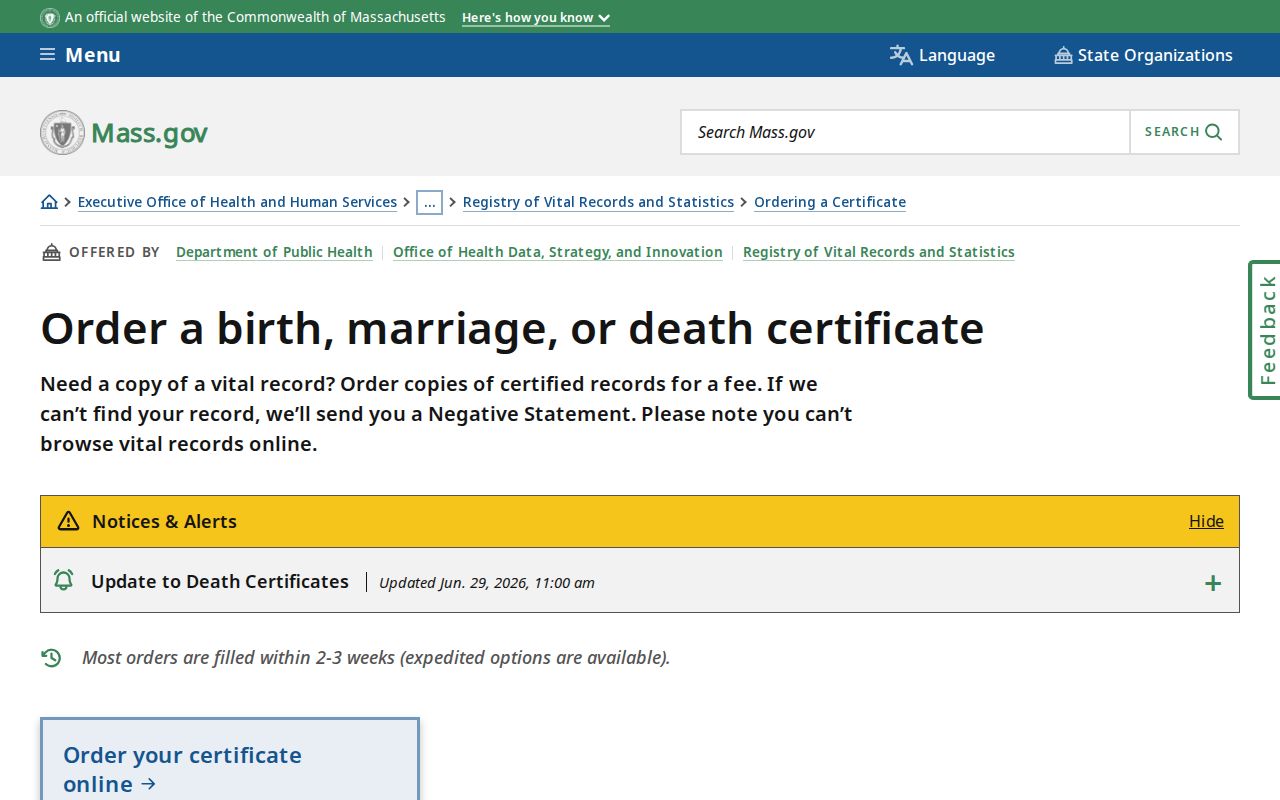
That order workflow differs from an archives register: a certified current copy, historical image, and courthouse case file each have their own keeper and access rule.
Dartmouth License and Business Records
A Dartmouth business certificate can identify a person connected to a local DBA, and the Commonwealth’s Corporations Division can be searched by entity, officer or director, identification number, or filing number. These are affiliation records, not proof that a person currently lives at an address. The Division of Occupational Licensure adds a public ePlace/eLIPSE search with individual or business options and fields for name, city, state, ZIP, board, license type, and license number.
The Massachusetts public license-search entry shows the available no-login route before any detailed application-account functions.
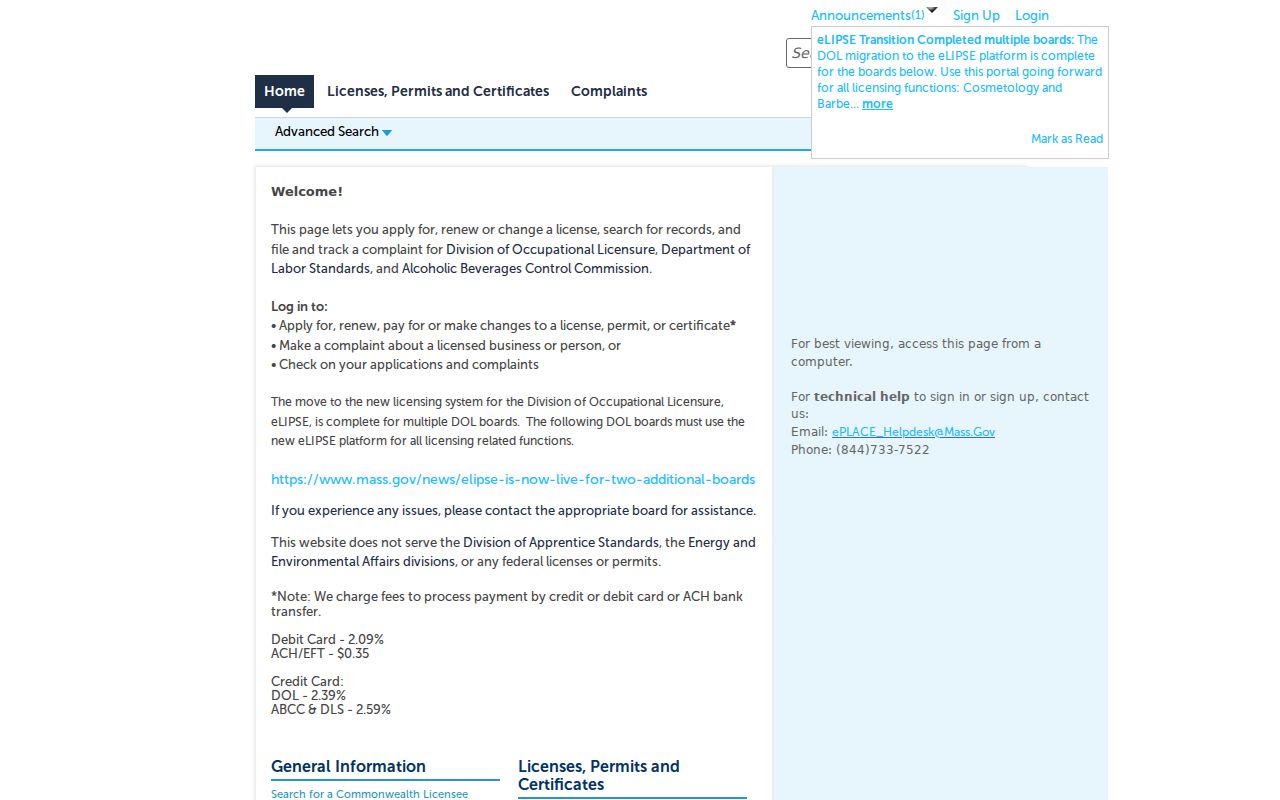
Compare a public business or license result with its filing date and stated location. A business address, registered agent, or occupational location serves a different purpose from a personal residence record.
Dartmouth Heir and Estate Clues
For a deceased former Dartmouth resident, the best corroboration often comes from probate, obituaries, cemetery material, later deeds, and official unclaimed-property claims. Dartmouth has no official online cemetery interment index in the research record, so the documented fallback is the Cemetery Division, Town Clerk genealogy route, library, local cemetery forms, and Dartmouth Historical and Arts Society material. A probate case can identify a petitioner, personal representative, heir, attorney, or dated case event, subject to court restrictions.
The Massachusetts unclaimed-property instructions offer a name-and-address search and a Start Claim process. A match requires proof and is not proof that the person currently lives in Dartmouth.
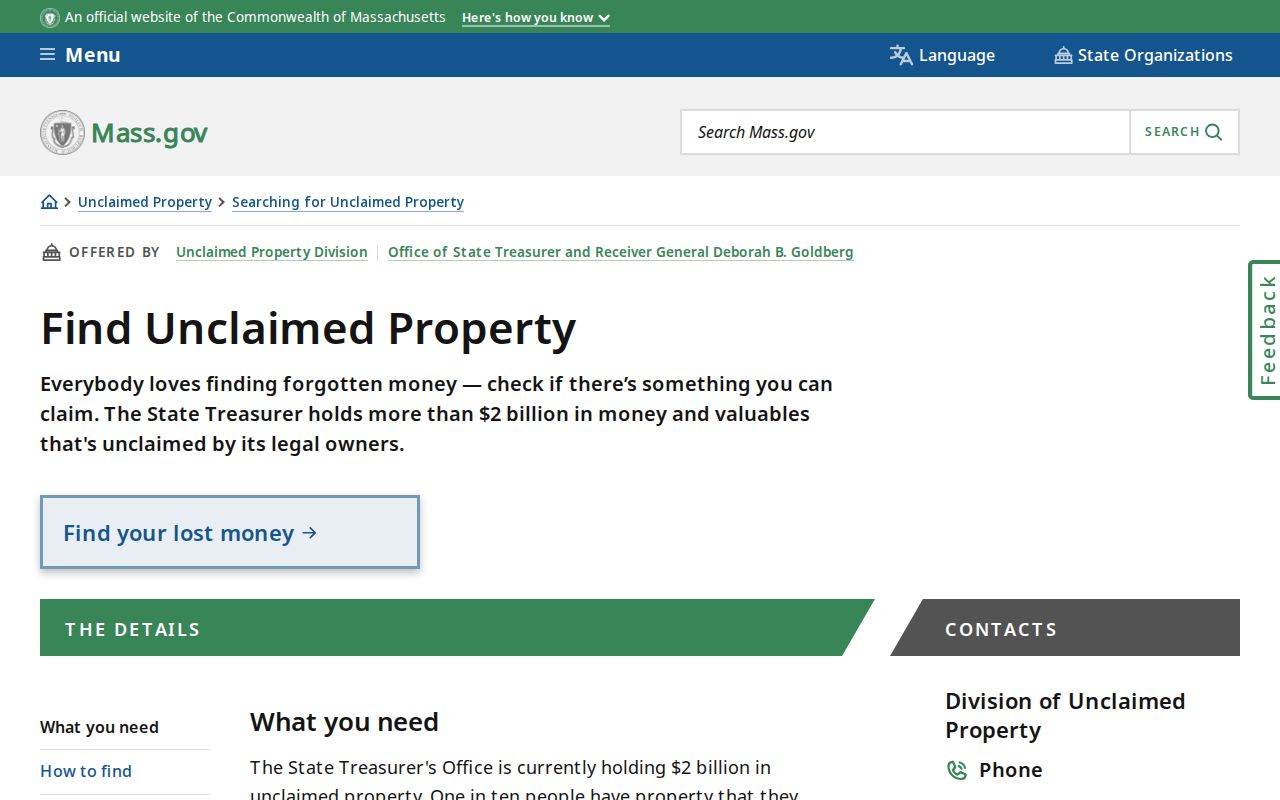
Use an estate lead to document a family-history connection, then verify the actual record with the filing court, Registry, or state custodian.
Dartmouth Safety Record Limits
Massachusetts directs the public to the Sex Offender Registry Board information route for classification-limited public information. It is not a general Dartmouth resident roll. The public web search has its own restrictions, and further Level 2 or Level 3 material is available through local police or the Board’s request process under the applicable rules. Treat the result as a safety resource with defined legal limits, not as permission to publicize or target a person.
The Massachusetts sex-offender information page identifies the public-search entry and official request channels.
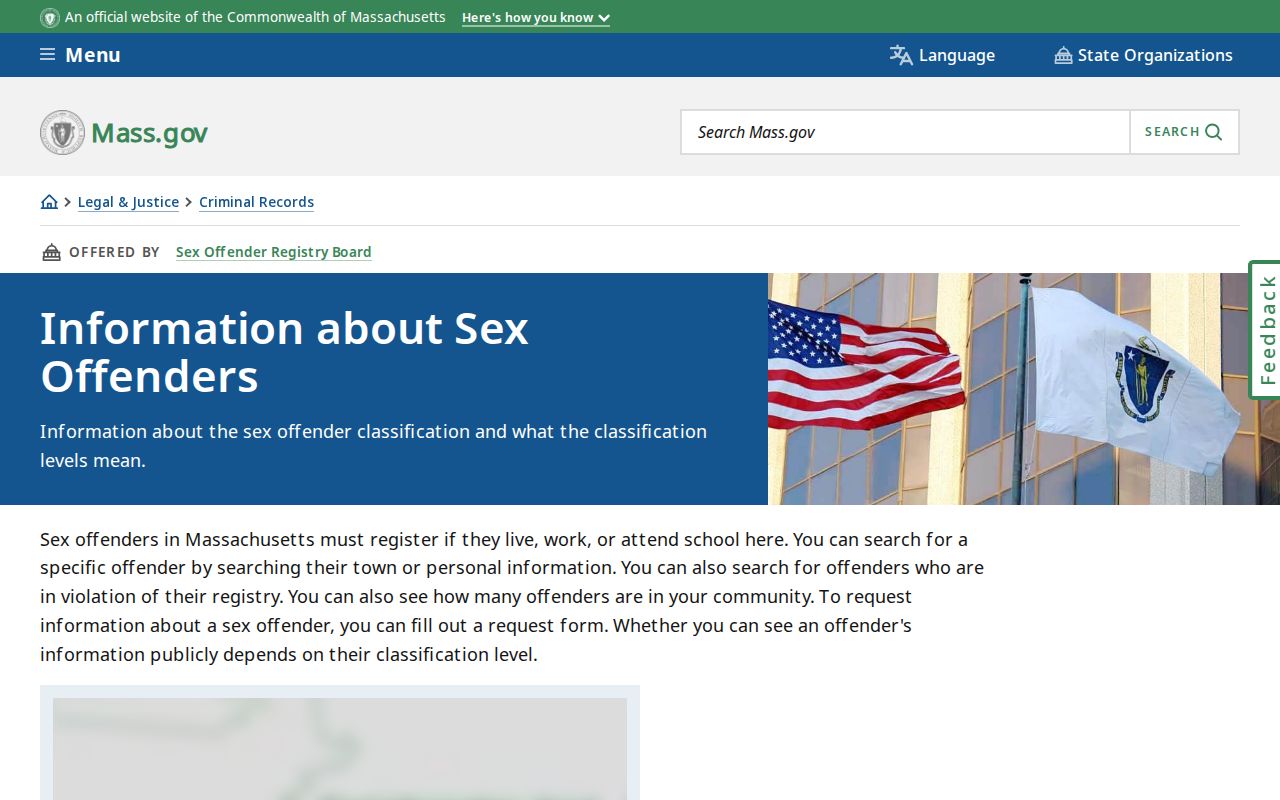
Official information must be used only as the Board directs. Harassment, threats, or misuse of a public record can cause serious harm and violate the law.
Dartmouth Record Access Limits
Massachusetts Public Records Law, M.G.L. c. 66, § 10, covers existing government records, with exemptions in M.G.L. c. 4, § 7(26). Dartmouth’s January 2026 policy directs a written request by mail, email, or in person to the department Records Access Officer, with the Town Clerk as the fallback for an unlisted department. Describe the existing record, office, place, date range, preferred format, and whether inspection or copies are sought. A custodian generally responds in writing within 10 business days and does not need to create a new list or answer an open-ended research question.
| Official record route | Private commercial category |
|---|---|
| Names the custodian, record date, source, and access limits | May combine older filings and other data with unclear timing or provenance |
| Can be checked at the office, portal, library, or court named in the record | May be incomplete or wrong for people with the same name |
| Supports a narrow request for an existing public item | Does not replace the original Dartmouth or Massachusetts record |
Note: The most reliable resident result states what the record proves, who holds it, and the date it was created or updated.
Historical Dartmouth Resident Directories
Historical Dartmouth searches shift from portals to collections. Verified combined Dartmouth, Acushnet, and Westport directory years include 1905, 1909-1910, 1915, 1927, 1929-1930, and 1932. The Dartmouth library adds Town Reports from the 1890s, Chronicle microfilm from the 1960s, local histories, in-library Ancestry Library Edition, and home-access HeritageQuest. The Dartmouth city directory collections identify the shelves, year runs, and entry-reading method in detail.
A directory entry can place a named person at an address in a particular publishing year, sometimes with an occupation, spouse marker, or street listing. It does not prove an earlier or later residence. Dartmouth’s local history is especially valuable because regional directory titles may combine neighboring communities and older deeds may use village names, farms, necks, mills, or bounds rather than a modern street number.
Dartmouth Early Land Records
Dartmouth’s land trail predates the modern town address system. Settlement dates to about 1652 and incorporation to 1664. The Dartmouth Historical and Arts Society describes a 1652 deed lead and early Bristol County material, with deed abstracts beginning in 1687-1709 volumes and a broader 1668-1767 project. Its Dartmouth land-record research explains why a family, probate, or neighbor search can be needed when a deed chain seems to stop.
Those early records may use a proprietor, farm, neck, mill, boundary, or adjacent landholder in place of a street number. Preserve the source’s own wording and date, then crosswalk it with a plan, map, later deed, village name, or parcel identifier. That careful sequence keeps a historical Dartmouth connection from being projected onto a modern address without evidence.